04 — PEDAGOGY & CO-DESIGN
Turning youth priorities into experiences future teachers can feel, examine and use
Youth priorities shape both what is explored and how learning happens.
 01
01The co-design cycle
- Listen — interpret youth evidence without reducing or sanitising it.
- Select — identify catalysts requiring a pedagogical and curriculum response.
- Co-design — join youth voice, creative expertise, ITE knowledge and local context.
- Experience — enable pre-service teachers to participate as learners.
- Reflect — examine feelings, relationships, assumptions and ethical responsibility.
- Rehearse and adapt — connect approaches with subjects, phases, placements and learner needs.
- Embed and evaluate — develop modules, resources and programme-level change.
- Feedback — share findings with young people as critical voice and iterative co-design catalyst.
Pedagogical approaches
- Drama, worldbuilding and inquiry
- Storytelling and creative writing
- Culturally responsive drama
- Forum Theatre and role work
- Visual and multimodal methods
- Outdoor and place-based learning
- Critical and democratic dialogue
- Reflective and arts-based action research
Explore responses by country
04A pedagogy that models the change
Creative practitioners, teacher educators and pre-service teachers co-design responses that model voice, choice, inclusion, emotional safety, collective inquiry and ethical dialogue. Each approach connects a Youth Catalyst with what participants do, the dispositions it may cultivate, the demands on facilitators and the contexts in which it has been used.
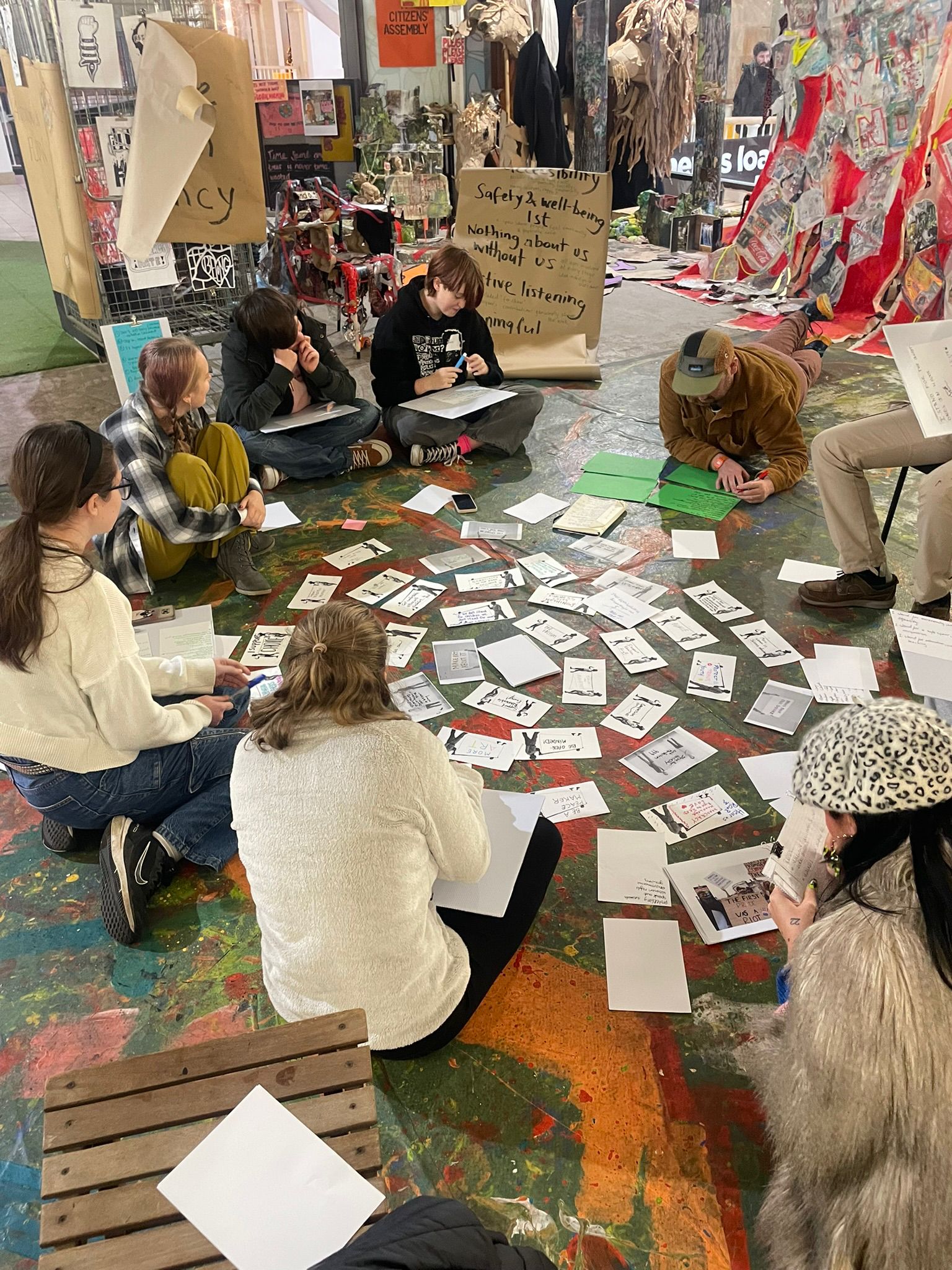
Creative inquiry in practice
An England youth session using collaborative, arts-based inquiry to surface experiences, priorities and proposals for education.
Pedagogy films and activity guides
Films, downloadable guides and case studies will connect each approach to its youth catalyst, learning dispositions, facilitation considerations and country context.